
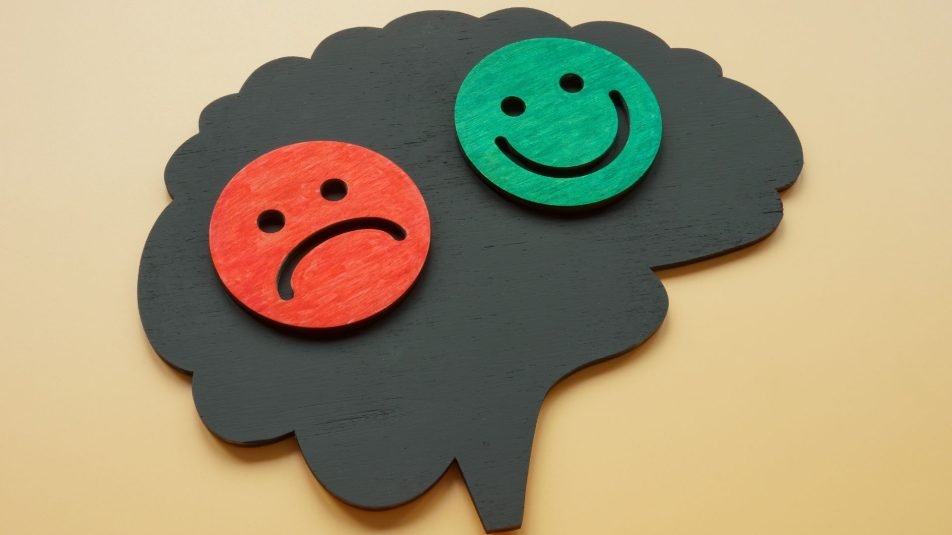
It’s All in Your Mind 🧠
Neuroplasticity is the brain’s remarkable ability to change, adapt and create new connections throughout our lives.
And here’s something worth thinking about…
Every negative thought you repeatedly tell yourself, “I’m not good enough,” “I always have bad luck,” “things never change” can reinforce familiar patterns in the brain.
Your brain is, in a sense, taking notes.
How neuroplasticity shapes your thinking:
Your brain is constantly adapting to your experiences, behaviours and patterns of thought. Repetition matters because frequently used neural pathways can become more established and easier for the brain to activate.
It’s why a thought you’ve had hundreds of times can eventually feel automatic.
You don’t necessarily stop to question it.
You just believe it.
The famous phrase “neurons that fire together, wire together” is often used to describe this idea. It comes from psychologist Donald Hebb’s work in the 1940s and captures a key principle of how repeated patterns of neural activity can strengthen connections.
So when you repeatedly think “I’m not good enough,” your brain can become increasingly familiar with that pattern of thinking.
That doesn’t mean every negative thought permanently rewires your brain. And it certainly doesn’t mean that your thoughts alone create everything that happens in your life.
But it does mean that the patterns we repeatedly practice can become more automatic.
And that’s where things get interesting.
Your brain can change.
The really good news about neuroplasticity is that your brain isn’t fixed, it’s updated.
The same capacity that allows unhelpful patterns to become familiar also gives you the potential to develop new ones. Think of it like creating a new path through a field. The path you’ve walked a thousand times is easy to follow. The grass is flattened and you barely have to think about where you’re going. But if you start taking a different route, that new path becomes easier to follow too.
Changing your thinking can work in a similar way. Instead of automatically accepting:
“I always get things wrong.”
You might begin noticing the thought and replacing it with:
“I’m learning, and I don’t have to get everything right.”
Instead of:
“Things never change.”
Try:
“Things can change, and I can take one small step today.”
This isn’t about pretending everything is wonderful. It’s not toxic positivity. It’s about becoming aware of the patterns you’re rehearsing and choosing which ones you want to strengthen.
How to change negative thought patterns
The first step is simply noticing. When a familiar negative thought appears, pause before automatically believing it.
Ask yourself:
Is this a fact, or is this a familiar thought?
That tiny moment of awareness can create space between you and the thought.
You can then practice a more balanced alternative.
You don’t need to force yourself to think positively all day. In fact, trying to replace every negative thought with an unrealistically positive one can feel frustrating. Instead, aim for thoughts that are realistic, supportive and useful. With repetition, patience and practice, you’re giving your brain opportunities to learn something different.
Can hypnosis help?
Yes!
Much of our thinking and behaviour can become habitual. Hypnotherapy can be used to help people explore and change unhelpful patterns, beliefs and responses, particularly when these patterns are getting in the way of the life they want.
It’s not about someone taking control of your mind, it’s about working with your attention, thoughts and responses in a focused way.
Your brain is constantly learning. So the question isn’t whether you’re rehearsing patterns. You are.
The question is:
What will you be rehearsing today?
Further reading on Neuroplasticity: https://www.hubermanlab.com/topics/brain-and-neuroplasticity